
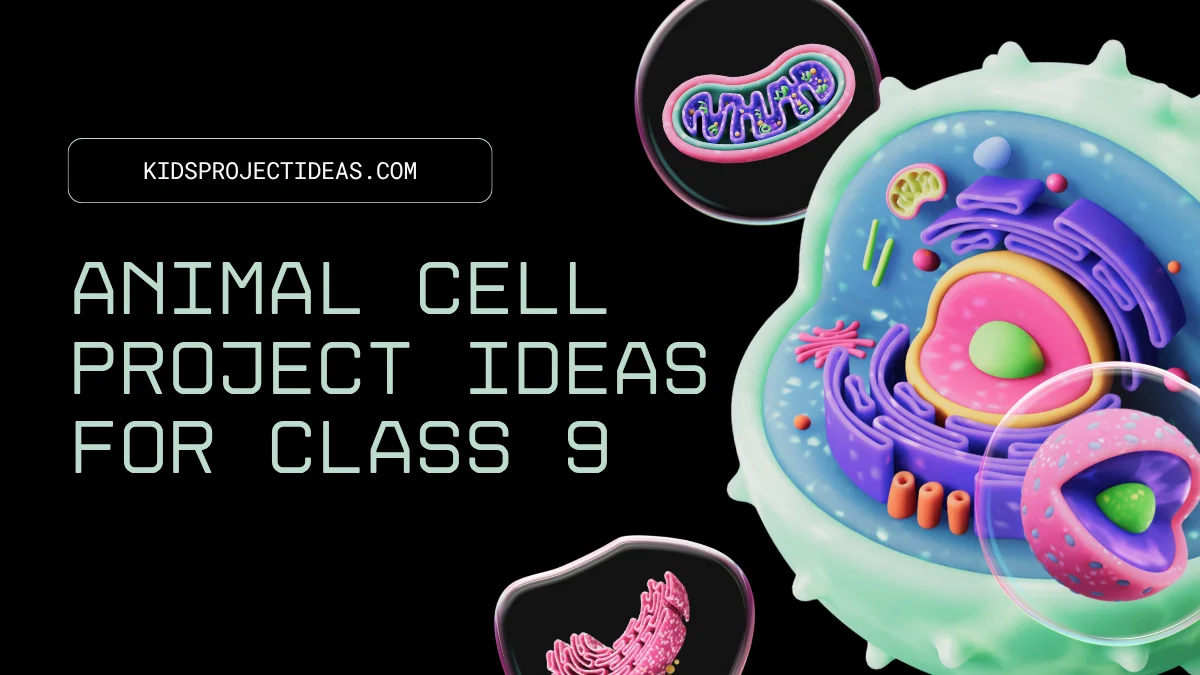
Animal Cell Project Ideas For Class 9 Students make biology class more interesting and very enjoyable. When students read about cells in textbooks, they can seem like complex structures that are hard to grasp. Making simple cell models or creating clear visual projects helps students see how each part works with the others.
These hands on activities let students explore the nucleus, mitochondria, cell membrane and other key parts in ways that stay in memory. Working on these projects also grows creativity and problem solving skills. Whether students use craft supplies, food items or digital tools, building something with their hands helps them learn better than only reading about cells. These projects are also easy and fun to share with classmates and teachers.
MUST READ: 89+ Science Project Ideas for Class 10 Working Model — Ready-to-Build Projects
Animal Cell Project Ideas For Class 9 Students
3D Physical Models Using Craft Materials
- Build a spongy animal cell model using foam sheets cut into organelle shapes and glued inside a clear plastic box to show how parts fit together.
- Make a hanging mobile cell where each organelle dangles from strings at different heights inside a wire hoop representing the cell membrane.
- Create a cross-section cell model using cardboard layers stacked on top of each other, with each layer showing different organelles at various depths.
- Construct a touchable texture cell on poster board using sandpaper for rough ER, bubble wrap for Golgi apparatus, and cotton balls for nucleus.
- Design a magnetic cell board where organelles are magnetic pieces that students can move around to learn their positions inside a painted cell outline.
Edible and Food-Based Models
- Assemble a rice krispies treat cell by molding the treat into a cell shape and pressing different colored candies into it for organelles.
- Build a fruit salad cell in a clear bowl using watermelon chunks as cytoplasm, a peach as nucleus, grapes as mitochondria, and blueberries as ribosomes.
- Create a layered dessert cell in a glass dish using vanilla pudding as cytoplasm and arranging cookies, gummies, and fruits as labeled organelles.
- Make a cell sandwich by cutting bread into a cell shape and using spreads, vegetables, and cheese to represent different cell parts on top.
- Design a cereal cell model in a shallow dish using milk as cytoplasm and various breakfast cereals to represent different organelles based on their shapes.
Technology and Digital Projects
- Build a digital animal cell presentation with clickable hotspots that show information about each organelle when someone taps the screen.
- Create an animated video showing how materials move through the cell, from the cell membrane through various organelles to exit points.
- Design a virtual cell tour app where users can walk through a giant cell and click on organelles to learn their functions.
- Make a cell structure website with separate pages for each organelle, including pictures, descriptions, and how they work together.
- Develop a computer slideshow comparing animal cells from different body parts like muscle cells, nerve cells, and blood cells to show variety.
Comparison and Analysis Projects
- Build side-by-side models of an animal cell and a plant cell using the same materials to clearly show what makes each type unique.
- Create a Venn diagram poster showing which cell parts appear in both animal and plant cells and which are found in only one type.
- Design a chart comparing animal cells from five different animals to show how cell structures vary based on the organism’s needs.
- Make a timeline poster showing how scientists discovered different organelles over hundreds of years using better microscopes.
- Construct a display board explaining how animal cells differ from bacterial cells and fungal cells in structure and complexity.
Interactive and Working Models
- Build a cell model with removable organelle pieces that attach with velcro so students can practice placing them in correct positions.
- Create a quiz game board shaped like a cell where players move through organelles and answer questions about each one to advance.
- Design a cell puzzle where each organelle is a separate piece that fits together to form the complete cell structure.
- Make a flip-book showing the cell membrane opening to let materials in and out through different transport methods.
- Construct a cell model with battery-powered parts that light up or spin to demonstrate active organelles like mitochondria producing energy.
Artistic and Visual Representations
- Paint a large watercolor cell on canvas using different colors to show the various organelles floating in the cytoplasm.
- Create a cell collage using magazine cutouts, colored paper, and fabric scraps arranged to form organelles inside a cell outline.
- Design a cell illustration using perspective drawing techniques to show depth and make the cell look three-dimensional on flat paper.
- Make a cell mosaic by gluing small tiles, beans, or buttons in patterns that represent different organelles on a board.
- Craft a cell sculpture from wire and colorful tissue paper, building each organelle separately and arranging them inside a wire frame.
Function-Focused Projects
- Build a flow chart model showing how a protein moves from creation at ribosomes through ER and Golgi apparatus to final destination.
- Create a poster explaining how mitochondria produce energy for the cell using simple diagrams and step-by-step explanations.
- Design an experiment model showing how the cell membrane controls what enters and leaves using colored water and semi-permeable materials.
- Make a demonstration board showing what happens when lysosomes break down old cell parts using before and after images.
- Construct a working model of endocytosis using a balloon as the cell membrane that folds inward to capture objects from outside.
Research and Documentation Projects
- Write and illustrate a comic book where organelles are characters working together to keep the cell alive and healthy.
- Create a cell diary with entries written from the perspective of different organelles describing their daily jobs and challenges.
- Design an organelle fact file with separate cards for each cell part including size, shape, function, and interesting facts.
- Make a cell newspaper with articles about different organelles, interviews with scientists, and diagrams explaining cell processes.
- Build a scrapbook documenting cell division process with drawings showing how the nucleus and other organelles change during mitosis.
Scale and Size Projects
- Create a giant walk-through cell model using a large appliance box where students can enter and see organelles hanging from the ceiling.
- Build a miniature cell model inside a clear Christmas ornament using tiny beads and wire to represent organelles at microscopic scale.
- Design a poster showing actual sizes of different organelles drawn to scale with measurements labeled in micrometers.
- Make a comparison display showing how many bacteria cells would fit inside one animal cell to demonstrate size differences.
- Construct a model showing how cells group together to form tissues using multiple connected cell models made from clear plastic cups.
Labeling and Identification Projects
- Create a cell identification game with unlabeled cell models where players must correctly identify and place name tags on organelles.
- Design a cell diagram with numbered parts and a separate answer key for students to practice naming organelles without seeing labels.
- Make flash cards with organelle pictures on one side and their names and functions written on the reverse side for study practice.
- Build a matching board with organelle images on the left and function descriptions on the right connected by strings or lines.
- Create a cell crossword puzzle where clues describe organelle functions and answers are the names of cell parts.
What Can I Use For An Animal Cell Project?
1 Common Household Materials
Clear plastic containers, storage boxes, or zip lock bags can show the cell membrane. Clear hair gel, corn syrup, or plain gelatin works well as the cytoplasm.
Everyday objects such as bottle caps for the nucleus, yarn for the endoplasmic reticulum, small beads for ribosomes, dry pasta for mitochondria, and cut sponges for the Golgi apparatus make easy organelle models. This method is low cost and shows resourcefulness while meeting learning goals.
2 Craft and Art Supplies
Modeling clay, Play Doh, or polymer clay lets students sculpt color coded organelles with detail and control. Styrofoam balls cut in half give a sturdy base for cross section views.
Poster board, cardboard, and foam sheets create solid foundations for many model types. Extras like cotton balls, pipe cleaners, tissue paper, felt fabric, and toothpick labels add depth and clear labels to the finished project.
3 Edible Options
Gelatin desserts make a translucent cytoplasm that shows the fluid interior of the cell. Various candies, fruits, and nuts can serve as colorful organelles. Round fruits with pits work well for the nucleus and nucleolus.
Gummy candies can represent flexible structures and small items such as chocolate chips or beans can stand in for ribosomes. Cakes, cookies, or rice cereal treats can function as bases that accept frosting and edible component placement.
4 Presentation Materials
Clear acrylic boxes, shadow boxes, or dome containers protect finished models while keeping them fully visible for display and assessment. Quality markers, colored pencils, paints, and printed labels improve the visual professionalism of posters and two dimensional diagrams.
Laminated information cards and computer printed text provide durable and polished documentation that raises the overall presentation quality of the project.
MUST READ: 20 Best Global Warming Projects For Class 7 Students (2026)
Summary
Animal Cell Project Ideas For Class 9 Students bring biology to life and make it easier to understand how cells work. Hands-on projects let you observe the parts of animal cells and learn the role of each component. Build models from common items such as clay, foam balls, or food to represent the nucleus, mitochondria, and cell membrane.
These activities improve retention of cell structure more effectively than only reading textbook passages. Making cell models also develops creativity while reinforcing key scientific ideas. Whether you create a three dimensional model, a poster, or an edible cell, these projects make microscopic structures clear and engaging.
A well made project can demonstrate to teachers that you understand how animal cells function
