
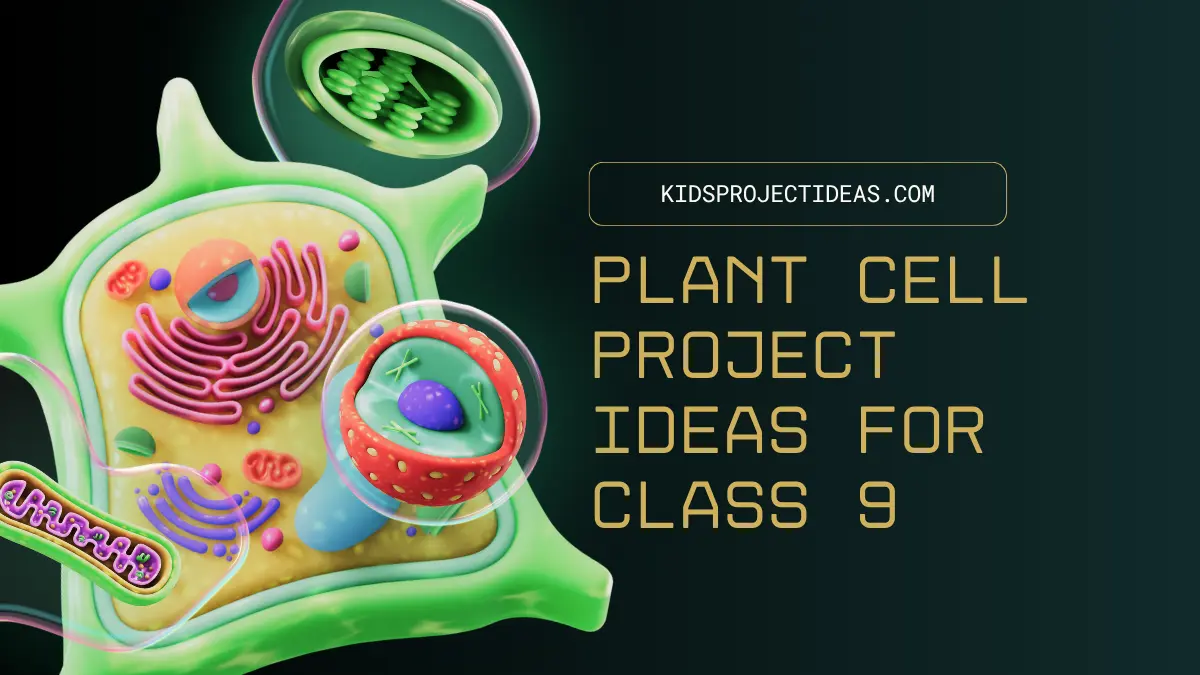
Plant cell project ideas for class 9 give students a clear practical chance to learn the basic structures that enable life in plants. With hands-on tasks, students can also see how cells act as the basic building blocks of every plant. These projects let you turn abstract biology into real examples, making it simpler to remember parts like the cell wall, chloroplasts, and vacuoles using simple experiments.
While working on these tasks you blend creativity with science whether you build three dimensional models, draw detailed diagrams, or make interactive presentations and run tests. Completing these projects helps you better understand how plant cells work and how they differ from animal cells which strengthens your biology foundation for future study. The skills gained through these activities will help you across science courses and labs.
MUST READ: 89+ Science Project Ideas for Class 10 Working Model — Ready-to-Build Projects
Plant Cell Project Ideas For Class 9
Here are the best Plant Cell Project Ideas For Class 9 students:
Physical Models and 3D Structures
1. Edible Plant Cell Model Using Jelly and Candies
Create a plant cell you can eat by using green jelly as cytoplasm, a grape as the nucleus, and different candies to show mitochondria, vacuoles, and chloroplasts so you can learn while having fun with food.
2. Clay Model Showing Cell Wall Layers
Build a plant cell from modeling clay where you make the cell wall with multiple layers to show how it protects the cell and keeps its shape, using different colors for each part.
3. Shoe Box Diorama of Plant Cell
Turn a shoe box into a giant plant cell by hanging different craft materials from strings to represent floating organelles, painting the inside green, and labeling each part clearly.
4. Thermocol Ball Plant Cell Cross-Section
Cut a large thermocol ball in half and decorate one side to show all the parts inside a plant cell, using beads, buttons, and foam pieces to make each organelle stand out.
5. Paper Mache Layered Cell Model
Create a plant cell using paper mache technique where you build up layers to show the cell membrane, cell wall, and cytoplasm, then add painted details for all organelles inside.
Charts, Diagrams, and Visual Presentations
6. Comparison Chart: Plant Cell vs Animal Cell
Make a colorful poster that shows plant cells and animal cells side by side, highlighting the special parts that only plant cells have like chloroplasts, cell walls, and large vacuoles.
7. Organelle Function Flow Chart
Design a chart that uses arrows and boxes to show how different parts of a plant cell work together, like how chloroplasts make food and mitochondria release energy.
8. Cell Division Stages Comic Strip
Draw a comic strip that tells the story of how one plant cell divides into two cells, showing each stage with simple drawings and speech bubbles to explain what happens.
9. Size Comparison Infographic
Create a poster showing how tiny plant cells really are by comparing them to everyday objects, using drawings and measurements that help people understand microscopic sizes.
10. Plant Cell Coloring Book with Facts
Make your own coloring book with outline drawings of plant cells on each page, adding interesting facts about each organelle that readers can learn while they color.
Working Models and Demonstrations
11. Water Movement Through Cell Membrane Demo
Build a demonstration using plastic bags and colored water to show osmosis, proving how water moves in and out of plant cells through the semi-permeable membrane.
12. Chloroplast Photosynthesis Light Box
Create a box with LED lights and green plastic to demonstrate how chloroplasts capture light energy, showing what happens when plants are in sunlight versus darkness.
13. Turgor Pressure Balloon Model
Use balloons inside a rigid frame to show turgor pressure, demonstrating how water-filled vacuoles push against cell walls to keep plant cells firm and upright.
14. Cell Membrane Selective Transport Game
Design a simple game using a board and game pieces where players move molecules through a cell membrane, learning which substances can pass through and which cannot.
15. Cytoplasm Movement Demonstration
Fill a clear container with corn syrup and small objects to show cytoplasmic streaming, demonstrating how materials move around inside plant cells through the gel-like cytoplasm.
Digital and Technology-Based Projects
16. Animated Plant Cell Video
Make a short animation video using free apps that shows a journey inside a plant cell, with voice-over explanations describing what each organelle does for the cell.
17. Interactive Plant Cell Quiz App
Create a simple digital quiz using presentation software where users click on different parts of a plant cell diagram and get instant feedback about their answers.
18. Virtual Reality Cell Tour Presentation
Design a 360-degree virtual experience using basic VR tools where viewers can look around inside a giant plant cell and read information cards about each structure.
19. Stop Motion Plant Cell Story
Film a stop-motion video using clay or paper cutouts that shows how organelles work together in a plant cell, moving characters frame by frame to create animation.
20. Plant Cell Identification Mobile Game
Develop a simple matching game for phones or tablets where players match organelle names with their pictures and learn their functions through repeated practice.
Microscopy and Observation Projects
21. Onion Peel Cell Slide Study
Prepare microscope slides from onion skin, stain them with iodine, and create detailed drawings of what you observe, labeling the cell wall, nucleus, and cytoplasm clearly.
22. Leaf Epidermis Stomata Investigation
Examine the bottom surface of different leaves under a microscope to find and draw stomata, comparing how many stomata different plant types have per square area.
23. Elodea Plant Cell Observation Journal
Observe elodea water plant cells under a microscope over several days, documenting chloroplast movement and creating a journal with sketches and written observations about cell behavior.
24. Plant Cell Size Measurement Project
Use a microscope with a measuring scale to calculate the actual size of different plant cells, then create a data table comparing cell sizes from various plant tissues.
25. Plasmolysis Effect Documentation
Place plant cells in salt water under a microscope and document what happens when water leaves the cells, photographing or drawing the cell membrane pulling away from the cell wall.
Comparative and Research-Based Projects
26. Root Cell vs Leaf Cell Structure Report
Research and present how plant cells in roots are different from cells in leaves, explaining why each type has special features suited for their specific jobs in the plant.
27. Evolution of Plant Cell Research Timeline
Create a timeline poster showing important discoveries about plant cells throughout history, from the first microscope observations to modern understanding of organelles.
28. Plant Cell Adaptations in Different Environments
Investigate how plant cells change in desert plants versus rainforest plants, presenting findings about how cells adapt to store water or maximize photosynthesis based on climate.
29. Chloroplast Arrangement Pattern Study
Compare how chloroplasts are arranged in cells of sun-loving plants versus shade-loving plants, explaining why their positioning differs and how this helps each plant survive.
30. Cell Wall Thickness Comparison Research
Study why some plant cells have thicker walls than others by comparing woody stem cells to soft leaf cells, presenting findings about structural support and protection needs.
Art and Creative Expression Projects
31. Plant Cell Mandala Design
Draw a beautiful circular mandala pattern inspired by plant cell structure, using the symmetry of cell shapes and organelles to create decorative art that is also scientifically accurate.
32. Stained Glass Window Cell Design
Create a plant cell design using colored tissue paper on clear plastic sheets to mimic stained glass, making organelles appear to glow when light shines through.
33. Plant Cell Poetry and Illustration Book
Write poems about different organelles describing their functions in creative language, illustrating each poem with artistic drawings of the plant cell parts being described.
34. Origami Folded Cell Structures
Learn origami techniques to fold paper into three-dimensional representations of plant cell organelles, arranging them together to form a complete artistic cell model.
35. Plant Cell Inspired Jewelry Design
Design and create wearable jewelry pieces shaped like plant cells and organelles using beads, wire, and polymer clay, making science fashionable and educational.
Hands-On Experimentation Projects
36. Cell Membrane Permeability Experiment
Test how different substances pass through cell membranes by placing potato pieces in various solutions and measuring weight changes to understand selective permeability principles.
37. Effect of Salt on Plant Cell Turgidity
Conduct an experiment placing plant stems in salt water versus fresh water, observing and recording how cells lose or gain water and how this affects plant stiffness.
38. Temperature Effect on Chloroplast Activity
Design an experiment testing how temperature changes affect the rate of photosynthesis in plant cells, using water plants and measuring oxygen bubble production at different temperatures.
39. Plant Cell Response to Light Direction
Grow seedlings in a box with one light source and document how cells on different sides of the stem change, showing cell elongation responses to light direction.
40. Cytoplasm Density Investigation
Prepare solutions of different densities and observe how they affect plant cell cytoplasm movement under a microscope, recording findings about cytoplasm composition and behavior.
Interdisciplinary Integration Projects
41. Plant Cell Mathematics Calculation Project
Calculate the surface area to volume ratio of plant cells in different shapes, using geometry and algebra to understand why cells must stay small for efficient nutrient exchange.
42. Historical Scientists Biography with Cell Discoveries
Research and present about Robert Hooke or other scientists who discovered plant cells, creating a biography poster that connects their life story with their scientific contributions.
43. Plant Cell Engineering Design Challenge
Design an improved plant cell for specific environments like space or underwater, applying engineering thinking to modify organelles for better survival in extreme conditions.
44. Economics of Plant Cell Products
Investigate how understanding plant cells helps industries make products like biofuels, medicines, and textiles, presenting the economic value of plant cell biology knowledge.
45. Plant Cell Music Composition
Create a musical piece where different instruments represent different organelles, with rhythms and melodies showing how cell parts work together in harmony to keep the cell alive.
Problem-Solving and Application Projects
46. Solving Plant Disease Through Cell Knowledge
Research a common plant disease that affects cells, explaining what goes wrong at the cellular level and proposing solutions based on understanding plant cell structure and function.
47. Improving Crop Yields Using Cell Science
Present ideas about how farmers can grow better crops by understanding plant cells, discussing topics like optimizing water uptake, photosynthesis efficiency, or cell division rates.
48. Plant Cell Inspired Solutions for Human Problems
Design innovations inspired by plant cell features, such as developing better solar panels based on chloroplast structure or creating stronger building materials modeled after cell walls.
49. Food Preservation and Plant Cell Structure
Investigate how different food preservation methods affect plant cells in fruits and vegetables, explaining at the cellular level why freezing, drying, or canning changes food texture.
50. Climate Change Effects on Plant Cells
Research and present how rising temperatures and changing carbon dioxide levels affect plant cell functions like photosynthesis, discussing implications for future food security and ecosystems.
Top 5 Presentation Tips For Plant Cell Projects
1. Create a clear visual hierarchy with strategic labeling
Label every organelle with arrows that point directly to the structure. Use consistent color coding across the model. Make all text large enough to read from a distance so viewers can identify parts easily.
2. Demonstrate scale and proportion accurately
Show the large central vacuole taking most of the cell space. Display multiple chloroplasts at correct relative sizes. Add a scale reference so viewers understand the microscopic nature and true proportions of the structures.
3. Incorporate function alongside structure
Explain each organelle’s role while pointing to it on the model. Link its physical shape to its job in the cell. Use simple comparisons to everyday objects so the audience understands what it is and why it matters.
4. Prepare clear talking points with smooth transitions
Organize the presentation from outer structures to inner components. Practice moving smoothly between topics to avoid awkward pauses. Use brief notes rather than reading a script to keep natural eye contact.
5. Include interactive or demonstrative elements
Add hands-on activities like passing microscope slides or small models. Show a live demonstration such as osmosis in action. Include a short quiz where classmates identify organelles to keep everyone engaged.
MUST READ: 49+ Social Studies Fair Project Ideas for 3rd Grade
Summary
Plant Cell Project Ideas For Class 9 give students a hands on way to learn about plant cell structure, function, and processes. These projects let ninth graders make accurate models that highlight major parts such as the cell wall, chloroplasts, mitochondria, and vacuoles. Learners may use common materials like clay, cardboard, paper, or food items to build three dimensional models that show each organelle clearly.
Doing these activities deepens scientific understanding and improves creativity, presentation skills, and problem solving. Teachers value these projects because they simplify difficult biology ideas. Pupils can work individually or in teams to design their models which makes learning more active, fun, and memorable. These projects also ready students for later biology topics and create a firm base for success in higher grade science classes and improve their study skills.
